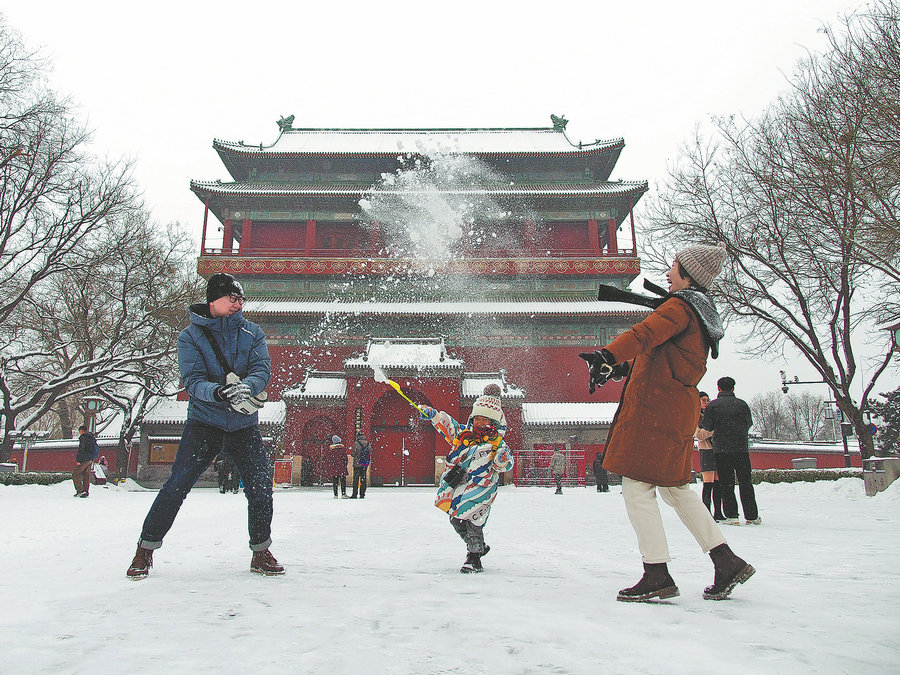
Bell and Drum Towers in Beijing
Introduction
The Bell and Drum Towers, or Zhonggulou, is a significant historical site in Beijing. Situated at the northern end of the city's central axis, these iconic structures serve as enduring symbols of Beijing's rich cultural and architectural heritage. Standing as a testament to the city's historical importance, the Bell and Drum Towers were once the tallest structures within the city walls, used for timekeeping and communication throughout the capital.
Historical Background
The origins of Bell and Drum Towers date back to the Yuan Dynasty (1271-1368), a period marked by the establishment of Beijing as the political and cultural center of China. During this time, the concept of a central axis line, known as zhong zhou xian (中轴线), began to take shape. This axis would become a defining feature of the city's layout, reflecting the significance of the "center" or "middle" in Chinese philosophy and urban planning.
The Bell Tower (Zhonglou) and the Drum Tower (Gulou) played crucial roles in the daily lives of Beijing's inhabitants. The towers housed enormous bells and drums that were used to indicate the time, with the Drum Tower marking the hours and the Bell Tower signaling the start and end of the day. Before the advent of modern timekeeping devices, these towers were essential for regulating city life, including the opening and closing of city gates.
Architectural Significance
The architectural design of Bell and Drum Towers exemplifies the precision and symmetry that characterize much of Beijing's historical architecture. The Bell and Drum Towers are strategically aligned with the central axis, embodying the harmonious balance and meticulous planning that defined the city's development. The Drum Tower, constructed during the Yuan Dynasty, features a robust wooden structure with intricate carvings, while the Bell Tower, built during the Ming Dynasty (1368-1644), showcases the grandeur and elegance typical of Ming architectural styles.
Both towers have undergone numerous renovations over the centuries, reflecting the evolving architectural trends and technological advancements of their respective eras. Despite these changes, Bell and Drum Towers have retained its historical charm, serving as a window into the architectural practices and urban planning philosophies of ancient China.
Cultural Impact
Bell and Drum Towers hold a special place in the cultural fabric of Beijing. Throughout the dynastic periods, the Bell and Drum Towers were more than mere timekeeping devices; they were integral to the city's ceremonial and social life. The towers were often used during important events and celebrations, symbolizing the passage of time and the rhythm of urban existence.
In contemporary Beijing, Bell and Drum Towers remains a popular tourist attraction, drawing visitors from around the world who seek to experience its historical ambiance and learn about its role in the city's past. The towers stand as reminders of Beijing's rich history and its evolution from an ancient capital to a modern metropolis.
Geographic Context
Situated at the northernmost point of Beijing's central axis, Zhonggulou offers a unique vantage point from which to observe the city's historic layout. The axis, stretching approximately 7.8 kilometers in length, serves as the backbone of Beijing's urban design. This central line was meticulously planned to represent the core of the city, with important structures and landmarks aligned along its path.
The location of Zhonggulou near Shichahai, a historic area known for its picturesque lakes and traditional courtyard homes (siheyuan), adds to its appeal. The nearby Jade River and Wanning Bridge further enhance the area's historical significance, offering insights into the waterways that once connected Beijing to other parts of China.








